Structural Drying in Riverside, CA
The plumber fixed the line on Tuesday and the puddle was gone by Wednesday. It is Saturday now, and the baseboard along the hallway has a dark line a foot up, the family room smells like a wet towel, and the laminate near the slider lifts when you step on it. This site routes your call to an independent local provider who dries out houses across Riverside and the western Inland Empire.
Why a dry-looking Riverside floor is still wet underneath
Concrete does not absorb water, so a slab pushes everything up into whatever sits on it. Carpet pad, the paper face of drywall, the particleboard in cabinet bases, and the bottom plate of every wall drink from the slab for days after the surface looks fine. The crew meters all of it before plugging in a single fan, and marks the wet boundary on the wall so you can see the scope.
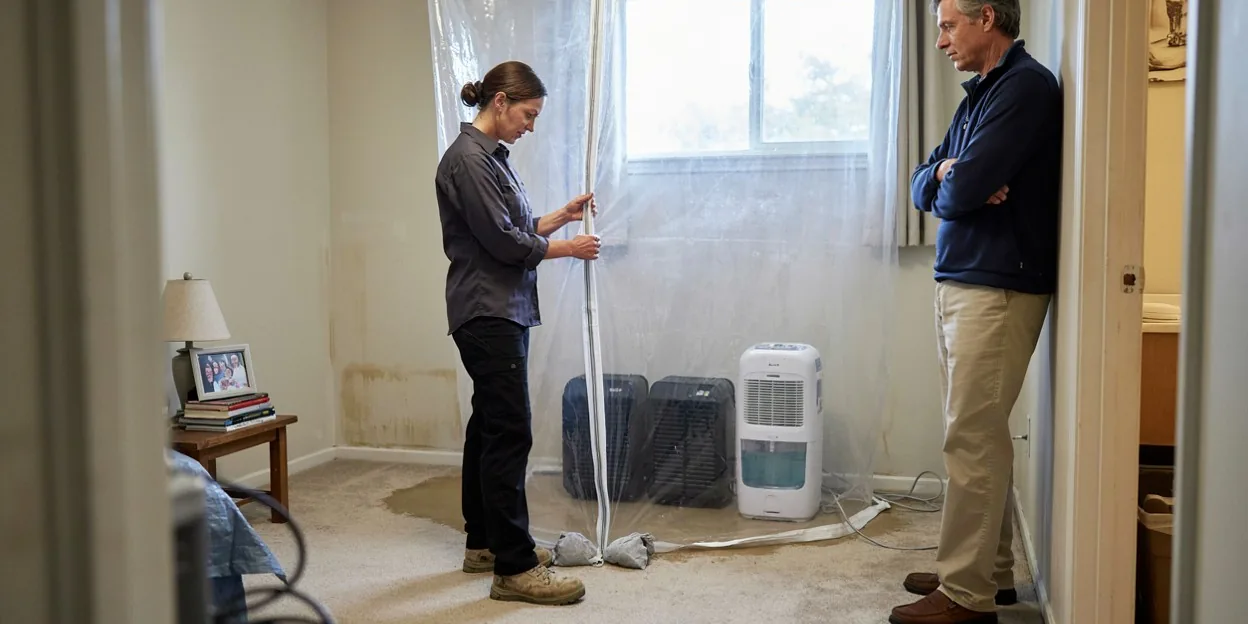
Then the equipment goes in. Air movers push air across the wet surfaces so moisture leaves the material, and dehumidifiers pull that moisture out of the air so it does not settle back into the next room. Where a wall reads wet but the drywall is sound, the crew may drill holes along the base and blow air into the cavity instead of cutting it open.
Keeping the equipment running and the windows shut
The fans are loud and the house gets warm. Leave them on. Shutting equipment off overnight sets the drying back a day. Keep windows and the slider closed, because the dehumidifiers are working against the house air, not the yard. In a damp January week in Riverside the outside air is wetter than the room, and opening up undoes the work. Ask the crew which rooms need to stay clear and where the cords run so nobody trips in the dark.
Drywall often stays, wet insulation does not
The readings decide. Drywall that is wet but not swollen can dry in place with a cavity setup. Drywall that has softened, or that sat wet for more than a few days, comes out. Insulation behind a wet wall is removed, because fiberglass holds water against the studs and will not dry inside the cavity. Cabinet toe kicks are opened so air reaches the base. Hardwood over a slab gets a floor-drying mat and a few days before anyone decides whether it comes up. The crew logs a reading on each material every day until it hits the target, and that log is what closes the job.
Drying a slab house through a cool, damp Inland Empire winter
Riverside summers dry a house almost on their own, with afternoons over 100 degrees and humidity in the teens. Winter is the problem season. The atmospheric river storms of January 2023 and February 2024 put water in garages across the flats and then left a week of overcast, 55-degree days behind them, and a wet wall in that weather does not dry without equipment. A storm flood cleanup in February takes longer to dry than a pipe leak in July.
The other local pattern is the slab leak that ran for weeks before anyone noticed. By the time the hallway carpet feels damp, the drywall on both sides has been wicking for a month, and slab leak water damage drying usually means opening the bottom of more walls than the puddle suggested. Stucco exteriors trap the moisture inside the wall, so the crew meters the garage and the outside walls from the inside.
Whether the drying is covered depends on your policy and on what caused the water. The crew's job is to make the readings and photos available; the adjuster decides from there. We make no claim about what any policy will pay.
Calling about a floor that looks dry but smells damp
Tell us when the water first showed up, whether the source has been fixed, and which rooms were wet. Mention a baseboard that has darkened or laminate that has lifted. Keep the address and a callback number at hand. Call (951) 631-2989.