Water Heater Leak Cleanup in Riverside, CA
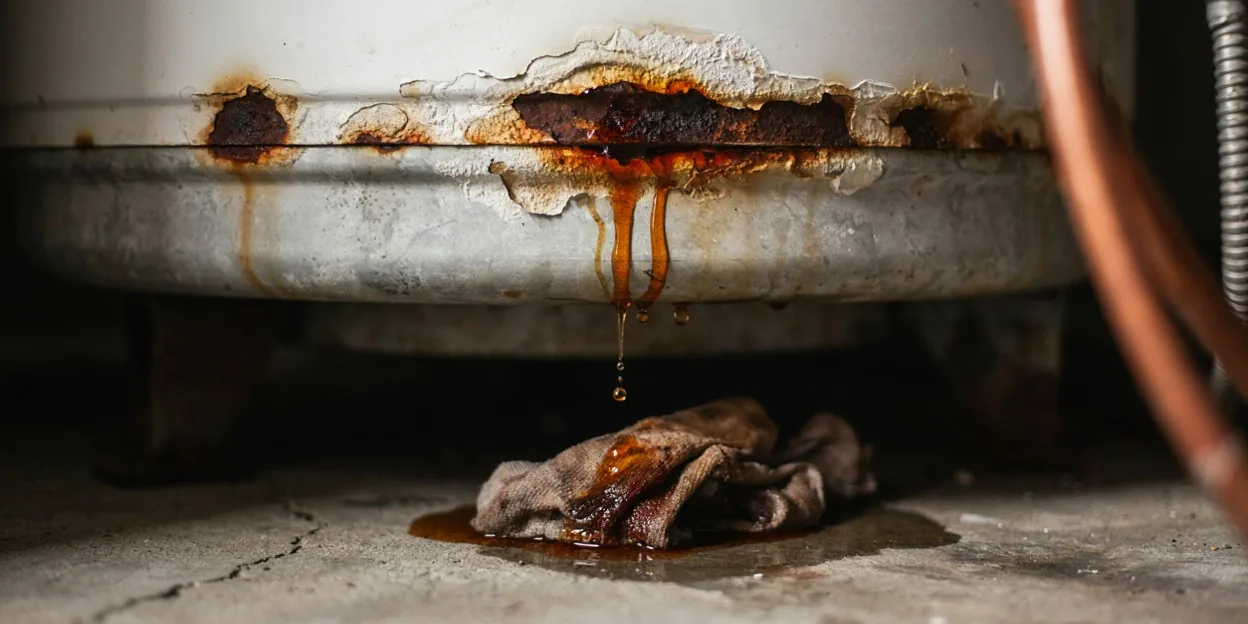
You opened the garage door on a Sunday morning and the floor was wet from the water heater corner to the driveway. The tank is still trickling from a seam near the bottom, the drywall behind it is dark two feet up, and the water ran under the wall into the hall closet on the other side. This site routes your call to an independent local provider who cleans up after water heater failures in Riverside and across the western Inland Empire.
Following the water from the tank across the slab
A forty- or fifty-gallon tank does not just empty once. It keeps refilling and leaking until the cold supply is closed, so the floor may have taken hundreds of gallons over a night. The crew pulls the standing water, then meters the garage walls, the shared wall into the house, the closet or hallway on the other side, and the bottom of any cabinets nearby. In a side-yard closet installation they check the stucco wall from inside the house, because the water runs under the sill plate.
Then they photograph the tank, the pan if there is one, and the waterline before the plumber hauls it out, because the adjuster will want to see what failed.
Close the cold valve, then the gas, then lift the boxes
Turn the cold-water valve on top of the heater clockwise until it stops. If it will not turn, close the house valve on the riser by the hose bib. Set the gas control knob to off, or trip the breaker if the heater is electric. Move boxes, bikes, and anything cardboard off the wet floor. Open the door between the garage and the house so you can see how far it went. Photograph everything before you move it. Then call and say the water heater failed.
The garage slab dries fast; the drywall behind the tank usually comes out
Bare concrete in a garage dries with air and time. The drywall behind and beside the tank is another matter. It has been wicking warm water for hours, and the paper face usually softens, so the crew cuts it a foot or two up and pulls the insulation. The shared wall into the house is metered from both sides. Carpet in a hall closet or bedroom that took the overflow gets its pad pulled and is dried in place where the readings allow. Laminate that swelled comes up. Structural drying equipment runs until each material hits its target.
Replacing the tank is the plumber's job. Ask the restoration provider whether they coordinate with the plumber or need the new unit installed first.
Why Inland Empire water heaters die young
Hard water is the reason. Riverside's supply carries enough dissolved mineral that scale builds in the bottom of a tank year after year, insulating the burner from the water and cooking the steel until a seam opens. A tank that might last twelve years on soft water often goes in eight here. Garage installations in Arlington, La Sierra, and Orangecrest see summer afternoons above 110 degrees inside, which does not help, and the drain pan under many 1980s and 1990s units was never plumbed to the outside.
Two-story tracts from the 1990s and 2000s sometimes put the heater in an upstairs closet, and when one of those fails the ceiling below becomes ceiling water damage repair work on the same call. A tank that failed in the side-yard closet of a 1960s house sends water under the stucco and into the hall, and the crew traces it the same way they would a slab leak.
A tank that fails suddenly is the kind of loss many policies respond to; a tank that has been weeping for months into a rusted pan often is not. The crew photographs and logs; the adjuster decides. This site makes no promise about coverage.
Calling about a water heater that let go in Riverside
Tell us where the heater sits, whether the cold valve is closed, and which rooms the water reached. Mention if the unit is upstairs or in a closet shared with living space. Have the address ready and a number we can reach you at. Call (951) 631-2989.